
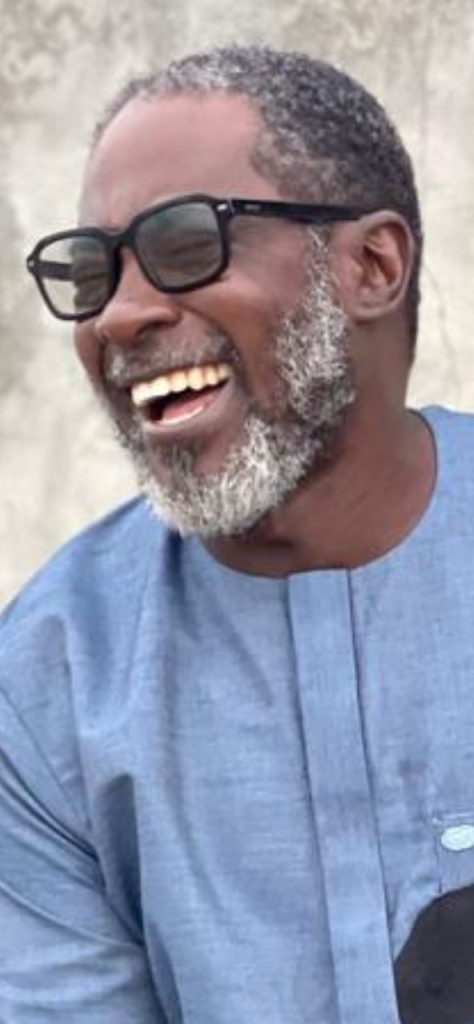
A Conversation with Sammy Sage Hassan and creatives in dialogue
Poetry is not merely written language. It is language becoming mirror, blade, fire, song, and memory.
In this profound exchange, questions about poetry, creativity, legacy, mentorship, funding, and the Nigerian spoken word movement unfold into a wider meditation on art itself.
Poetry as Metaphor
One of the most striking ideas raised was the challenge of defining poetry not by dictionary meaning, but by metaphor.
Poetry became: a mirror, a knife, a reflection, a song, an unentangling, a sacred confusion.
According to Sammy Sage Hassan, the metaphor of the mirror may be one of the most powerful images for understanding poetry.
“The mirror tells you who you are. A reflection is a projection. A mirror is you separating yourself from you and observing that you in real time.”
This thought positions poetry as an act of self-confrontation. The poet becomes both observer and observed. Poetry is therefore not simply expression; it is revelation.
Poetry as a Knife
When Godson Osarenren described poetry as “a knife cutting deep,” the metaphor opened another dimension.
A knife can wound, but it can also heal.
The discussion explored different kinds of knives: the assassin’s blade, the butcher’s knife, the kitchen knife, the surgical scalpel.
This distinction matters because poetry itself operates differently depending on intention.
Some poems destroy illusion.
Some dissect truth.
Some nourish.
Some liberate emotion carefully like surgery.
Thus, poetry becomes an instrument — dangerous in careless hands, transformative in wise ones.
Creativity and the Nature of Thought
The conversation also challenged the assumption that creativity is always linear.
Poetry may move: cyclically, multi-directionally, emotionally, spiritually, musically.
Yet poetry is not chaos.
It still seeks: beauty, emotion, structure, composition, denouement.
An especially profound insight emerged:
“There is an unentangling in poetry which ends up entangling.”
The poet untangles emotion from within the self, only for the poem to entangle readers emotionally and intellectually.
This paradox is part of poetry’s sacredness.
Legacy: What Does a Poet Leave Behind?
The discussion on legacy moved away from fame and toward value. According to Sammy Sage Hassan: “Your work is your legacy.”
Legacy is not a trophy waiting in the future. It is the cumulative weight of one’s contribution.
The lecture emphasized: purpose looks forward, legacy looks backward, work stands in the middle.
A creator obsessed with legacy during creation risks corruption through ego and validation.
Instead, the poet should ask: How much value am I adding? How truthful is my work? Will this outlive me naturally?
Legacy, therefore, is not manufactured.
It is earned through consistency, depth, and sincerity.
Legacy: What Does a Poet Leave Behind?
The discussion on legacy moved away from fame and toward value. According to Sammy Sage Hassan: “Your work is your legacy.”
Legacy is not a trophy waiting in the future. It is the cumulative weight of one’s contribution.
The lecture emphasized: purpose looks forward, legacy looks backward, work stands in the middle.
A creator obsessed with legacy during creation risks corruption through ego and validation.
Instead, the poet should ask: How much value am I adding? How truthful is my work? Will this outlive me naturally?
Legacy, therefore, is not manufactured.
It is earned through consistency, depth, and sincerity.
The State of Spoken Word in Nigeria
Perhaps the most sobering section of the conversation concerned the Nigerian spoken word movement.
Sammy Sage Hassan argued that spoken word in Nigeria is still in its infancy.
Several concerns were raised:
1. Validation Culture
Many poets, it was argued, seek applause more than mastery.
Creativity becomes a tool for attention rather than artistic depth.
2. Lack of Historical Consciousness
The “average Nigerian poet,” according to the discussion, lacks sufficient engagement with literary history despite belonging to an intellectual art form.
3. Fragmented Community
Competition and “crab mentality” weaken collective growth.
Instead of building ecosystems, creatives often compete for temporary visibility.
4. Absence of Infrastructure
Unlike comedy, music, or Nollywood, spoken word lacks a nationwide performance ecosystem capable of sustaining artists economically and culturally.
Yet hope remains.
The lecture identified platforms, open performance spaces, collaborative culture, book-sharing communities, and artistic ecosystems as possible foundations for revival.
Humility, Depth, and Collective Growth
Another major theme was humility. But humility alone is insufficient. Depth must accompany humility.
One remarkable metaphor described selfish artistic ambition as: “a cell growing adversely against the rest of the body — that’s a cancer.”
This metaphor reframes the artist not as an isolated genius but as part of a cultural organism.
True artistic growth requires: collaboration, perspective, generosity, shared progress.
Can a Poet Exist Without Formal Training?
The answer offered was both simple and liberating: “A poet writes. That’s the training.”
Formal mentorship can help, but poetry ultimately develops through reading, observation, study, self-analysis, persistent writing.
The mechanics of poetry exist, but they are not prisons.
A poet may master structure only to transcend it.
Rules are foundations — not cages.
The Economics of Poetry
Funding emerged as a painful reality. Even accomplished artists continue to struggle financially. Albums remain under-promoted.
Projects remain underfunded. Poets often fail to support other poets.
This reveals a larger structural problem: A literary culture cannot survive solely on passion.
For spoken word to mature, there must be: investment, audiences, publishing structures, touring circuits, performance spaces, institutional support.
Art needs ecosystem as much as inspiration.
Songspeak, Dub Poetry, and Musical Influence
Sammy Sage Hassan described his latest work as a return to lyrical and musical poetry inspired by the 1980s tradition of dub poetry.
He introduced the idea of songspeak — poetry that leans into rhythm, chant, musicality, and nursery-like cadence.
This reminds us that poetry was oral before it became textual.
Children first encounter poetry not on paper but in song.
Rap vs Spoken Word
The conversation concluded by distinguishing rap from spoken word.
Though both are lyrical art forms, they differ in: delivery, mechanics, intention, structure, conceptual framework.
Rap is poetic.
Spoken word is poetic.
But poetry itself is larger than either form.
The important insight is that genres can influence one another without losing identity.
Conclusion
This dialogue ultimately reveals poetry as more than performance.
Poetry is:
mirror, surgery, memory, music, questioning, unentangling, cultural responsibility.
And perhaps most importantly: Poetry is work. Not merely applause. Not temporary limelight. But the difficult lifelong labor of shaping language into something capable of surviving time.